What Is 4-Way Stretch Fabric, and Can a Woven Really Be 4-Way?
4-way stretch is one of the most overused and least defined terms in fabric sourcing. This article cuts through the confusion: what 4-way actually means, how a woven fabric can genuinely be 4-way, and how to tell the real thing from a "high-stretch" substitute. The short answer is yes — a woven can be true 4-way stretch when elastane (spandex) is engineered into both the warp and the weft, so it stretches and recovers in all directions, not just across the width.
What Does "4-Way Stretch" Actually Mean?
Stretch direction is defined by the fabric's two yarn systems: the warp (running the length of the roll) and the weft (running across the width). A 2-way stretch woven has elastane in one system — nearly always the weft — so it gives across the width but stays stable along the length. A 4-way stretch woven has elastane in both systems, so it extends and recovers lengthwise and crosswise.
The number is not about "how much" it stretches; it is about how many directions. That distinction is exactly where buyers get lost. If you want to see how elastane placement in a single yarn system produces 2-way stretch and why a 95/5 poly-spandex woven moves in only one direction, read how spandex placement in warp and weft sets the stretch direction.
How Does a Woven Become True 4-Way Stretch?
By engineering elastane into both directions. A woven 4-way build carries elastane yarn in the warp and the weft, so both yarn systems can extend and recover. That is the mechanical difference from a 2-way woven, where only the weft carries the spandex.
This matters because you cannot fake 4-way by loading more spandex into a single direction. A 2-way fabric at higher elastane content is still 2-way — it just stretches further in that one direction. Direction comes from placement, not percentage.
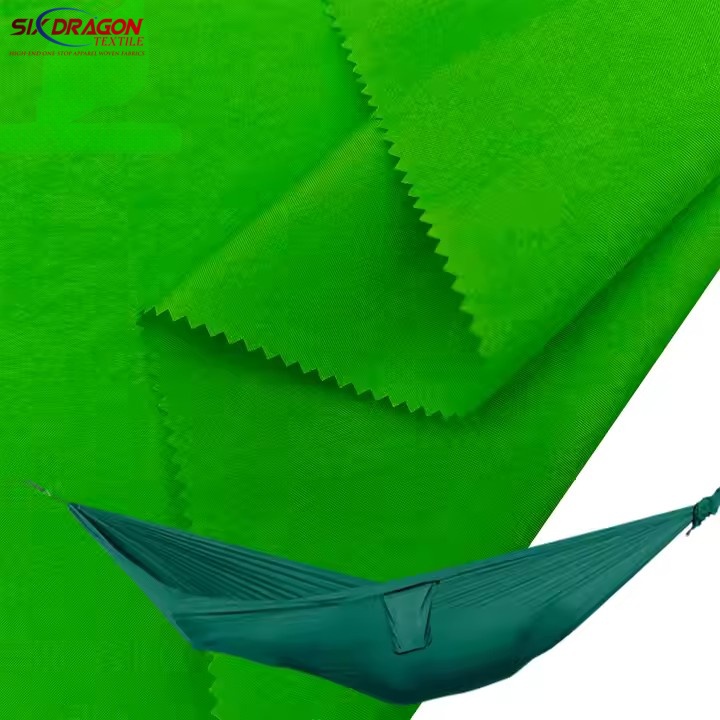
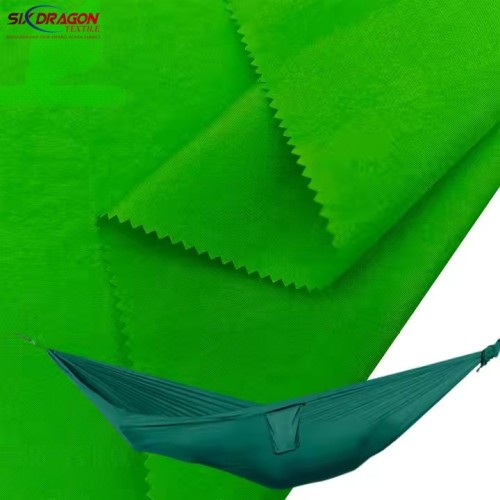
A typical functional build here is polyester-based with a modest elastane share — for example a 105 GSM four-way stretch woven at around 147 cm finished width. The honest stretch and recovery numbers for any specific construction should be measured on graded swatches under tension in both directions, rather than assumed from a spec sheet: extension, recovery, and width set all depend on weave density, yarn type, and finishing.
Woven 4-Way vs Knit 4-Way — Which Should You Choose?
Most 4-way stretch people picture — leggings, tight base layers — is knit. Knit 4-way stretches freely because of its looped structure, which is right for skin-tight athletic wear. But that same looped structure collapses and sags in a structured garment. It does not hold a crisp line.
Woven 4-way is the answer when the garment needs both movement and shape: outdoor shells, stretch trousers, workwear, technical outerwear. The interlaced woven structure holds a cleaner, more tailored silhouette that a knit cannot, while the dual-direction elastane still lets the wearer move.
Our own guidance to clients: for lower-perspiration outdoor use, a woven 4-way is usually the better call, because it delivers fashion-forward tailoring that knit 4-way tends to lose to sag. The trade-off is honest — woven 4-way is a more complex, more demanding fabric to build and control than a plain 2-way or a knit, and it is not always necessary. Where a garment only flexes in one direction, a 2-way woven does the job at a simpler build. Match the construction to the movement, not to the marketing word. Explore our polyester 4-way stretch woven fabrics to see the range we build.
Expert Analysis: the Fiber Science Behind Woven 4-Way Stretch
Elastane (spandex) is a segmented polyurethane. Its soft segments uncoil under load and re-coil on release — that recoil is recovery. In a woven 4-way, elastane is placed in both the warp and the weft, usually covered or core-spun with polyester so the PET carries strength, drape, and color while the elastane fraction supplies bidirectional give. Because elastane runs in both systems, both must be tensioned and set correctly — which makes a 4-way woven meaningfully harder to build than a 2-way one, where the warp stays inelastic and stable.
Coloration follows the base fiber. On a polyester 4-way, that is disperse dyeing under high temperature and high pressure (around 130°C) — the correct chemistry for PET, not the reactive or vat dyeing used on cotton. Elastane is heat-sensitive, so temperature, time, and reduction-clearing must be controlled to develop color on the PET without degrading the elastic segments in either direction.

The Trap: "High-Stretch" Sold as "4-Way," and Cheap Yarn That Fails Later
Two things get hidden in low-cost 4-way quotes.
"High-stretch" swapped for "4-way."
A real case: a Pakistan-based garment manufacturer ordered a polyester 4-way woven (elastane around 5%, 147 cm width, 105 GSM) in volume, then needed to cut cost. The fabric was changed to a no-spandex high-stretch fabric — and with the end client's confirmation, produced to that high-stretch quality to hit the cost target. That was a legitimate, transparent swap because everyone knew what they were buying. The danger is when it happens silently: a mill quotes "4-way," ships a mechanical-stretch or 2-way fabric, and the buyer only discovers the missing direction after garments are cut. High-stretch is not 4-way. Ask which yarn systems carry the elastane, in writing.
Cheap greige yarn that fails in weaving and dyeing.
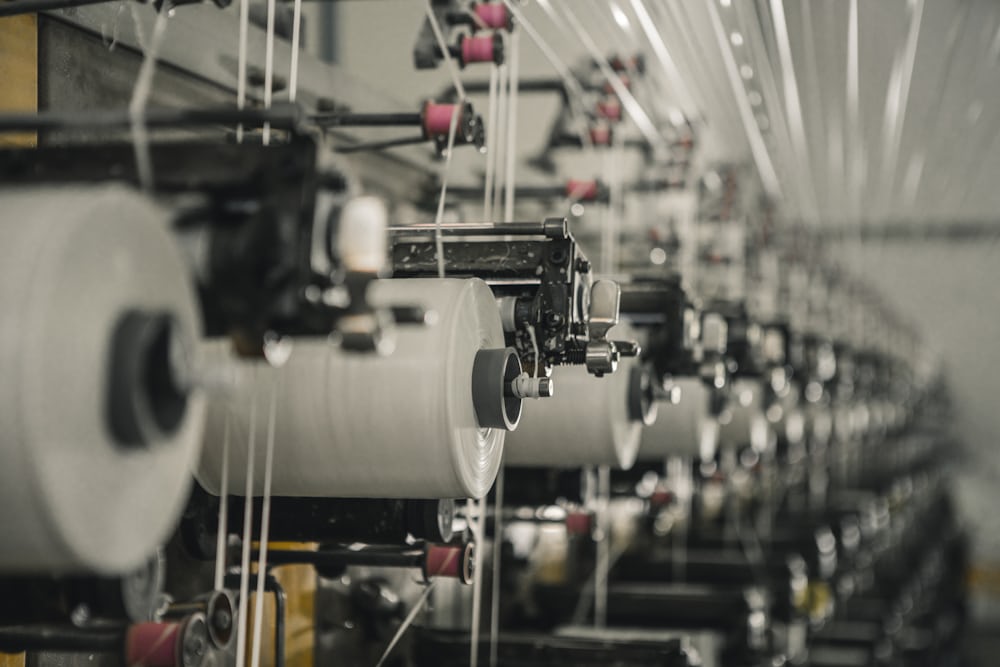
The quality problems on stretch wovens usually trace to the raw material, not the design. Low-grade yarn from small mills causes warp and weft breakage on the loom, and it drives shade banding in dyeing — faint horizontal shade bands that appear because inconsistent yarn takes up dye unevenly. Neither shows on a spec sheet; both show on the cutting table. The defense is unglamorous: source yarn from a major producer. Our stretch wovens run on Hengli filament, which is why the face stays clean, without broken ends or hidden shade bands. This is also why raw-yarn grade drives dyeing consistency across our polyester programs.
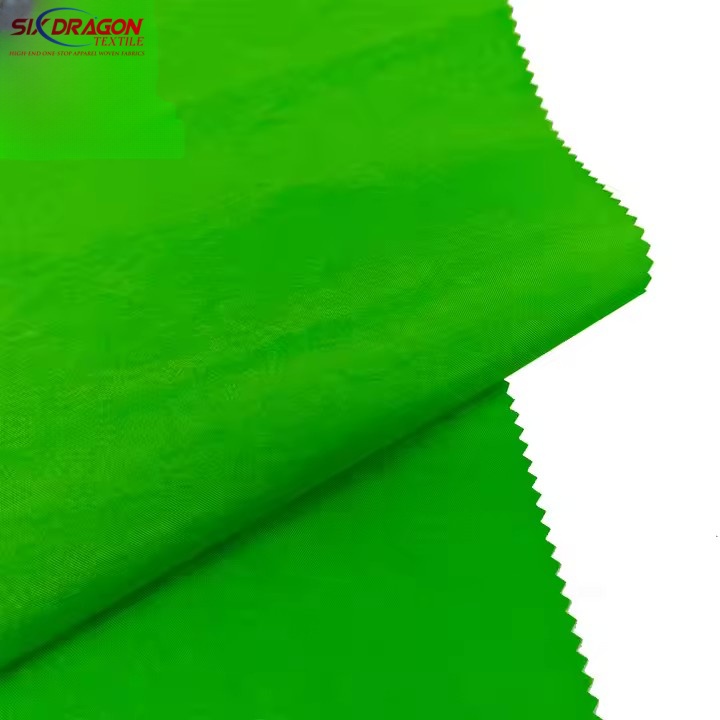
Recovery, shade, and structure on a 4-way woven cannot be judged from a photo or a video — the difference is in the hand and in the roll. The only reliable check is graded swatches under tension in both directions. Tell us the movement and silhouette your garment needs — we will send warp-and-weft stretch swatches so you can feel true 4-way before you commit.
Pro FAQ
Can a woven fabric really be 4-way stretch?
Yes. A woven is 4-way when elastane is engineered into both the warp and the weft, giving stretch and recovery in both directions. It also holds a more tailored shape than a 4-way knit.
What is the difference between 2-way and 4-way stretch?
2-way stretches in one direction only, usually the weft. 4-way stretches and recovers in both warp and weft. The difference is direction, set by where the elastane sits — not by how much stretch you feel.
Is a "high-stretch" fabric the same as 4-way stretch?
No. A high-stretch fabric can be mechanical/textured with no elastane, or 2-way, and still feel stretchy in one direction. Always confirm which yarn systems carry the elastane before treating it as 4-way.
Should I choose woven or knit 4-way stretch?
Knit for skin-tight athletic wear that needs maximum free stretch. Woven 4-way for garments that need both movement and a clean, tailored shape — outdoor shells, stretch trousers, workwear — where a knit would sag.
Why do some 4-way stretch fabrics get broken threads or shade bands?
Almost always raw-yarn quality. Low-grade yarn breaks on the loom and dyes unevenly, causing faint shade banding. Sourcing from a major yarn producer prevents both.
Not sure whether your garment needs true 4-way, a 2-way woven, or a no-spandex high-stretch build? Send your spec or a reference swatch — we will confirm warp/weft elastane placement and quote a made-to-order 4-way build, produced on major-mill yarn with a controlled two-stage heat-set.
Reviewed by the Six Dragon Textile technical team — Hangzhou Six Dragon Textile Co., Ltd, one-stop woven apparel fabrics, woven-fabric expertise since 2007.