Peach, Sand Wash, Calender or Coating: Choosing a Hand-Feel Finish for Woven Polyester and Nylon
Two mills can ship the same greige quality, the same dyed shade and the same width, and still hand you two fabrics that feel nothing alike. The difference is the finishing route — where a flat, slightly stiff woven becomes papery, dry, glossy or dense, and where several of the properties on your test report are actually decided. This guide covers the four hand-feel routes that account for most polyester and nylon woven apparel programs: peach, sand wash, calender and coating.
Finishing Sets What Dyeing Cannot
Dyeing fixes colour. Weave construction fixes the structural baseline — a twill, a satin and a ripstop will never finish to the same hand, which is why weave selection comes first in the sequence covered in our guide to choosing a polyester woven weave. Finishing then modifies that baseline: surface friction, filament alignment, bulk, and sometimes a film.
The practical consequence is that "soft finish" is not a specification. Soft is achieved by at least four mechanisms, each with a different cost and side effect. Naming the mechanism, not the adjective, is what gets a repeatable fabric.
The Four Routes at a Glance
Each route works by a different physical principle, so each one trades something away to buy its hand.
| Route | How it works | Hand it produces | What it costs |
|---|---|---|---|
| Peach / sanding | Emery or sanding rollers abrade the surface filaments | Dry, matte, velvety, low-sheen | Tensile and tear strength drop; shade reads lighter |
| Sand wash | Softener-assisted tumble washing with mechanical action | Relaxed, limp, slightly peached-in look | Shrinkage and width control get harder |
| Calender / Schreiner | Heat and pressure through smooth or engraved rollers | Flat, compact, glossy, crisp | Air permeability falls; glaze can look plastic if overdone |
| Coating / backing | PU or PA compound applied and cured as a film | Body, wind resistance, matte back face | Weight gain, stiffness, and fastness interactions |

Peach Finish: Buying Softness With Abrasion
Peach finishing, also called sanding or emery finishing, passes the cloth against rotating abrasive rollers. The rollers cut into the surface, lifting and breaking filament ends into a fine fuzz. That fuzz is what the hand feels: it scatters light instead of reflecting it, so the fabric reads matte and the colour reads a shade lighter and softer than the same dye lot unpeached.
Because material is physically removed, peach finishing has a measurable cost. Fabric weight falls, and both tensile and tear strength drop — modestly on a 200 gsm twill, materially on a lightweight 70 gsm lining. This is the most common misunderstanding in the finish conversation: approving a 90 gsm peach product, then querying weight and tear results against an unpeached standard. Our note on specifying fabric weight covers the same effect from the finishing side.
Directional character matters too. Sanding one direction against the other leaves a surface that changes appearance depending on which way you stroke it. If the garment will be cut in mixed orientations, specify a non-directional sanding pattern, or accept visible panel differences.
Sand Wash: Softness Through Movement
Sand washing, in modern practice, is a tumble process rather than an abrasive one: the cloth circulates in a softener bath with mechanical action, sometimes with inert media. Crimp redistributes, residual tension from weaving and dyeing releases, and the cloth hangs limper than before.
What it buys is drape. What it costs is dimensional control. A sand-washed woven has already been relaxed, so its behaviour in the garment wash may differ from the unwashed sample your pattern was cut on. Specify shrinkage after the wash route, on the finished, already-washed cloth.
Sand wash also sharpens the shade boundary. Edge and centre differences that were barely visible on a flat finished roll become more apparent once the surface is relaxed and fuzzed, so a sand-washed program deserves a full-width check at approval rather than a small swatch.
Calender and Schreiner: Pressure Plus Heat
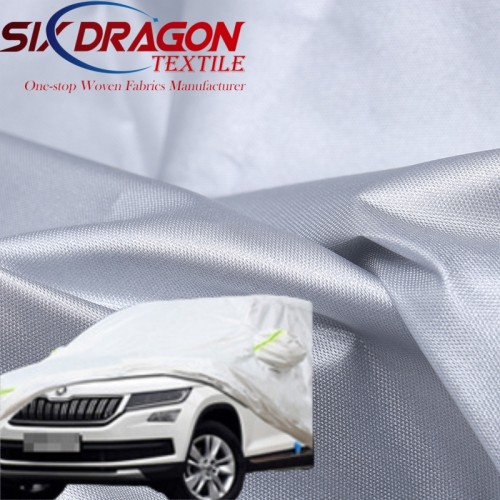
Calendering passes the cloth between heated steel rollers under pressure. A plain calender with a smooth steel roll against a filled roll flattens the weave crimp, compresses the surface and produces a compact, glossy face. A Schreiner calender uses an engraved roll to lay the filaments in one direction, giving a higher, more directional sheen at lower pressure — the classic route to a flat, liquid-looking surface on a fine polyester or nylon plain weave.
The hand becomes crisp and cool, and the reflection becomes the product. The trade is permeability: flattening the crimp closes the spaces between yarns, so air flow falls and the fabric feels warmer. On a lightweight shell or lining this is often what the program wants; on a summer program it can be a mismatch.
Two specification points prevent disappointment. Calendering deepens shade, so the approved standard must be the calendered piece, not the dyed piece. And calender gloss relaxes with washing and pressing, so a program that needs durable sheen must state it, with the durability route confirmed on request.
Coating: Buying Body and Barrier
Coating applies a polymer film — usually polyurethane or polyacrylate — to one face, then cures it. A clear coat adds wind resistance and slight body with minimal visual change. A white or pigmented coat gives opacity, a matte back face, and often the two-tone look a padded program relies on. A thin coat behind a ripstop base is the standard route to a lightweight outdoor shell, covered in more detail in our article on nylon ripstop specification.

Coating is the route that changes the most properties at once. It adds weight, so a 60 gsm base may deliver at 85 gsm. It stiffens hand as a function of add-on, which makes "light coating" a useless instruction — specify add-on in gsm, or specify hand against a physical standard. It also interacts with fastness: a film over a dyed ground traps dye and plasticiser migration, and wet crock on dark shades can move either way.
Adhesion is the property that fails in the field rather than the lab. If the film delaminates after a few washes, the fabric is finished regardless of its test report. State the wash cycles adhesion must survive, and confirm the coating partner's capability on request.
Where the Routes Collide
Finishes are not additive. Three conflicts come up repeatedly.
- Soft plus durable water repellency. The softeners that build a pleasant hand are often hydrophilic and sit on the same surface the repellent needs. Buying both means accepting a compromise in one, and it should be named in writing.
- Peach plus high tear strength. Abrasion removes material, so a tear target set on the unpeached base leaves less margin than expected. Set tear and tensile targets on the finished, peached cloth.
- Calender plus breathability. Compaction closes the weave. If air permeability is specified, calendering pressure has a ceiling, and the two numbers must be quoted together.
Colour fastness sits under all of them. Finishing chemistry can yellow pale shades, dull bright ones, and shift wet crock results, so the grades you require should be tested on the finished cloth, using the test methods set out in our guide to reading a fabric test report. For base polymer behaviour that shapes the finishing window, the comparison of polyester versus nylon wovens covers the difference in heat sensitivity.
Writing the Finish into a Specification
Six lines turn a hand-feel wish into something a mill can be held to.
- Name the mechanism — sanded, tumble-washed, calendered or coated — plus the face it applies to.
- Anchor the hand to a physical standard: a signed hanger or a retained bulk sample, dated and stored. Adjectives travel badly between languages.
- Quote the properties on the finished cloth: weight, width, shrinkage, tear, crock and air permeability where relevant, all measured after the last finishing stage.
- State add-on where a film or a heavy softener is used, in gsm, with a tolerance.
- State the durability route — how many wash cycles the effect must survive, and whether the effect is mechanical or chemical.
- State the shade reference point — dyed before finishing or finished cloth, under a named light source.
Where a program needs several properties at once, sequence the request: base weave, then dyeing route, then finish. Buying them in one paragraph is how tolerances get lost. Our polyester woven buyer's guide sets out the wider build-up, and the article on printing on polyester wovens covers the extra constraint that appears when a print sits under the finish.
Frequently Asked Questions
Does peach finish reduce fabric strength?
Yes. Sanding removes surface material, so both tensile and tear strength fall and the cloth weighs slightly less. The loss is small on mid-weight twills and significant on light linings. Always set strength targets on the peached cloth.
Can sand wash replace a softener?
Partly. The tumble action relaxes the cloth and softens it mechanically, but most routes still use a softener in the bath. Mechanical relaxation changes drape; the softener changes surface friction. They are different effects.
Why does my calendered fabric look shinier than the sample?
Usually higher roll temperature or pressure than the approval piece, or a different engraved pattern. Calender gloss is sensitive to both, so the approval should record the machine setting, not only the visual result.
Will a coating change the colour?
A clear coat deepens and saturates slightly, and a white or pigmented coat changes the back face entirely. Wet crock on dark shades can also move. Approve the coated piece as the colour standard.
How do I specify hand feel when I cannot send a sample?
Describe the mechanism, then the measurable consequences: surface sheen, drape relative to a reference fabric, add-on in gsm. Finish durability and available add-on ranges depend on the order and are confirmed on request.
Next Step
Pick the route before you pick the adjective. Send the end use, the base weave and the hand you are trying to reach and we will come back with the finishing route, the properties it will move, and what to quote on the finished cloth. If you already have a bulk sample that feels right, send it as the hand reference and we will build the specification around a physical standard instead of a description.