
Roll Length, Tube and Winding Face: Specifying Put-Up and Packing for Woven Polyester and Nylon
A fabric can pass every lab test and still arrive unusable, because the failure happened after finishing: in the way the piece was tubed, wound, stacked and loaded. Put-up — the length, weight, diameter and packing of a roll — is a specification line as real as yarn or weight. Woven polyester and nylon are thermoplastic, so a fold or a pressure ridge taken in a warm warehouse can become a visible line at the cutter.
Roll Geometry Is a Specification Line
Roll geometry drives three downstream costs: inspection time, warehouse handling, and cutting yield. Writing only "rolls of about 100 metres" leaves the winder free to choose tension, tube and diameter, and those three choices are the ones that generate claims later.
The numbers worth writing down are length per roll, net weight, outside diameter, tube size, winding face and winding direction. Width belongs in the same conversation, as our guide to usable width, bow and skew explains, because width, grain and roll build are all judged on the same unrolled piece.
Roll Length and Roll Weight Pull Against Each Other
Long rolls cut handling and splicing waste, but every added metre raises weight and diameter. A 100 m roll of a mid-weight woven polyester near 150 gsm at 150 cm width weighs roughly 22 kg; the same 100 m in a 300 gsm coated cloth is about 45 kg.
Warehouse and cutting-room staff handle rolls by hand, and a ceiling near 25 kg is common practice, though the figure that suits a programme is confirmed per order. Where weight has to be capped, length has to give, and the roll count on the packing list rises instead. Weight and cover are linked in the same way at the yarn level, as covered in specifying fabric weight.
The Tube, and Why Its Wall Matters
The cardboard tube carries the winding tension, and it carries the whole roll when the goods are lifted by the core. A thin wall crushes oval under a heavy roll, and an oval core produces an out-of-round roll that will not sit flat or unwind evenly.
Tube inside diameter is normally quoted in inches and matched to the customer's unwinding stand. Wall thickness, tube length flush or protruding, and whether the core is humidity treated are the four details most often left off an order sheet.
| Put-up item | Typical practice | What it controls | Where it goes wrong |
|---|---|---|---|
| Length per roll | 50 m, 100 m or 100 yd, quoted with a tolerance | Splicing waste against handling weight | Short rolls on a long marker |
| Net roll weight | Capped for manual handling, confirmed per order | Warehouse and cutting-room handling | Bottom rolls crushed in a stack |
| Tube ID and wall | Matched to the unwinder, wall sized to roll mass | Roll roundness and unwinding tension | Oval core and starring creases |
| Outside diameter | Set to fit bag, carton and container plan | Packing density and freight cost | Roll will not enter its own bag |
| Winding face | Face out for plain dyed goods, face in for coated and printed | Face protection against inspection access | Scuffed face on an exposed roll |
Face In or Face Out, and Which Way to Unwind
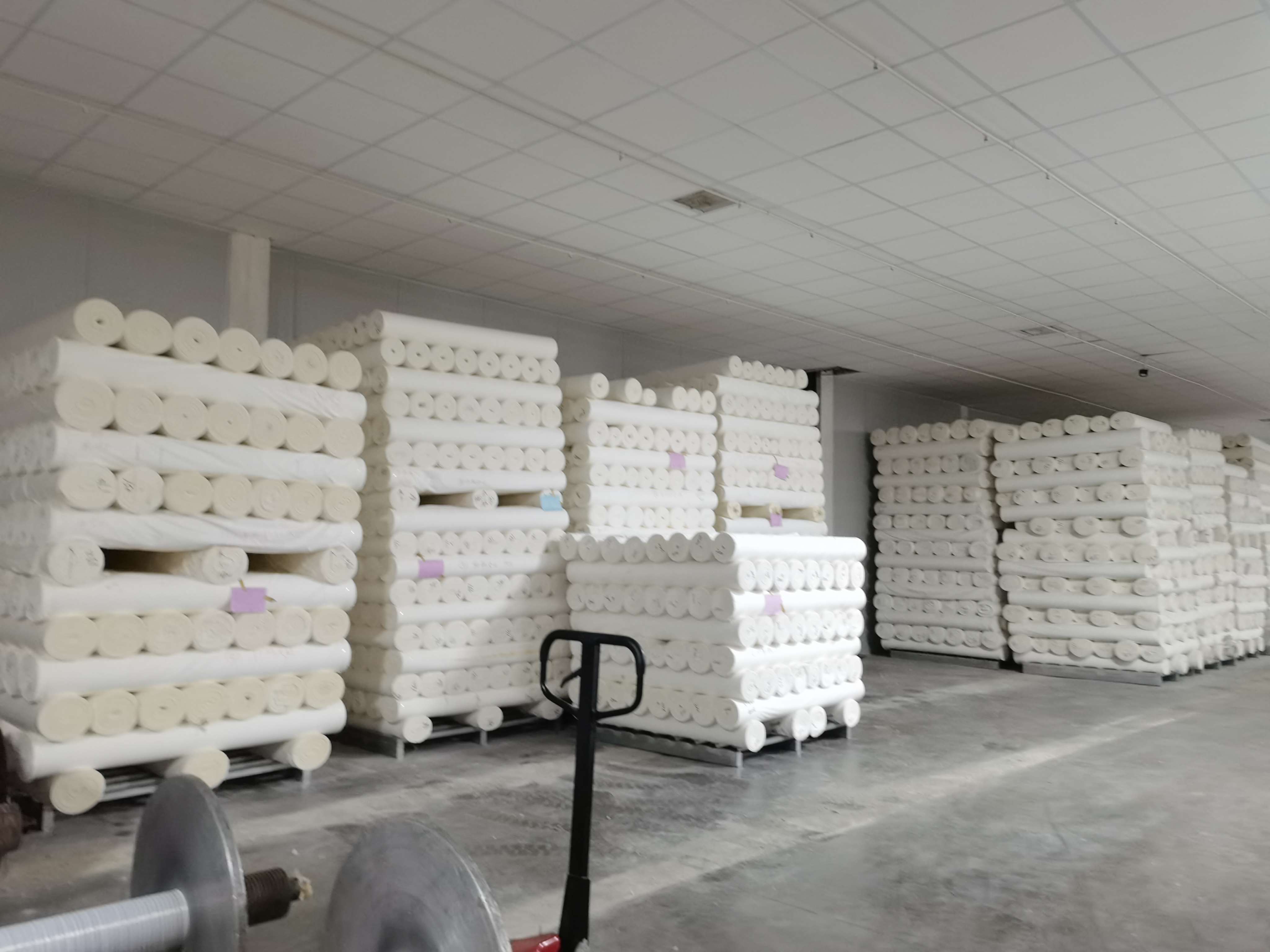
Face out puts the good side on the outside of the roll. It can be inspected without opening, and it is the surface that takes every knock in a warehouse. Face in protects the face but hides it, so the roll must be opened before it can be graded.
Coated, printed and high-lustre goods are usually wound face in, often with an interleaf, because a scuff on a coated face cannot be repaired. Whichever is chosen, the direction must be written, so the cutter unrolls the piece the same way it was inspected. Face options are compared in choosing a coating.
Roll Build: Tension, Selvedge and Starring
Winding tension decides whether a roll is firm or baggy. Too loose and the layers shift, which produces telescoped rolls and a skewed unwind. Too tight on an elastic cloth and the face takes compression marks that only surface weeks later.
The selvedge is the stiffest part of a piece, so a roll builds thicker at the edges than in the middle. That difference appears as hard ridges down the roll and a dished end. Slitting, or a taper in edge tension, is what holds an even build. The route that produced the cloth is walked through in how polyester woven fabric is dyed and set.
Where Roll Faults Become Cutting Faults
A crease is a thermal set, not a wrinkle. Woven polyester folded under load in a warm store will show a line that survives steaming. Calendered, coated and peached faces are the most exposed, because on those cloths the face is a surface effect rather than a fibre effect, as set out in choosing a hand-feel finish.
Roll marks and crease marks are graded at inspection like any other appearance defect, and the grading rules are set out in our article on woven fabric defects and the four-point system, which is the language to use when a claim has to be settled.

Stacking and Storage
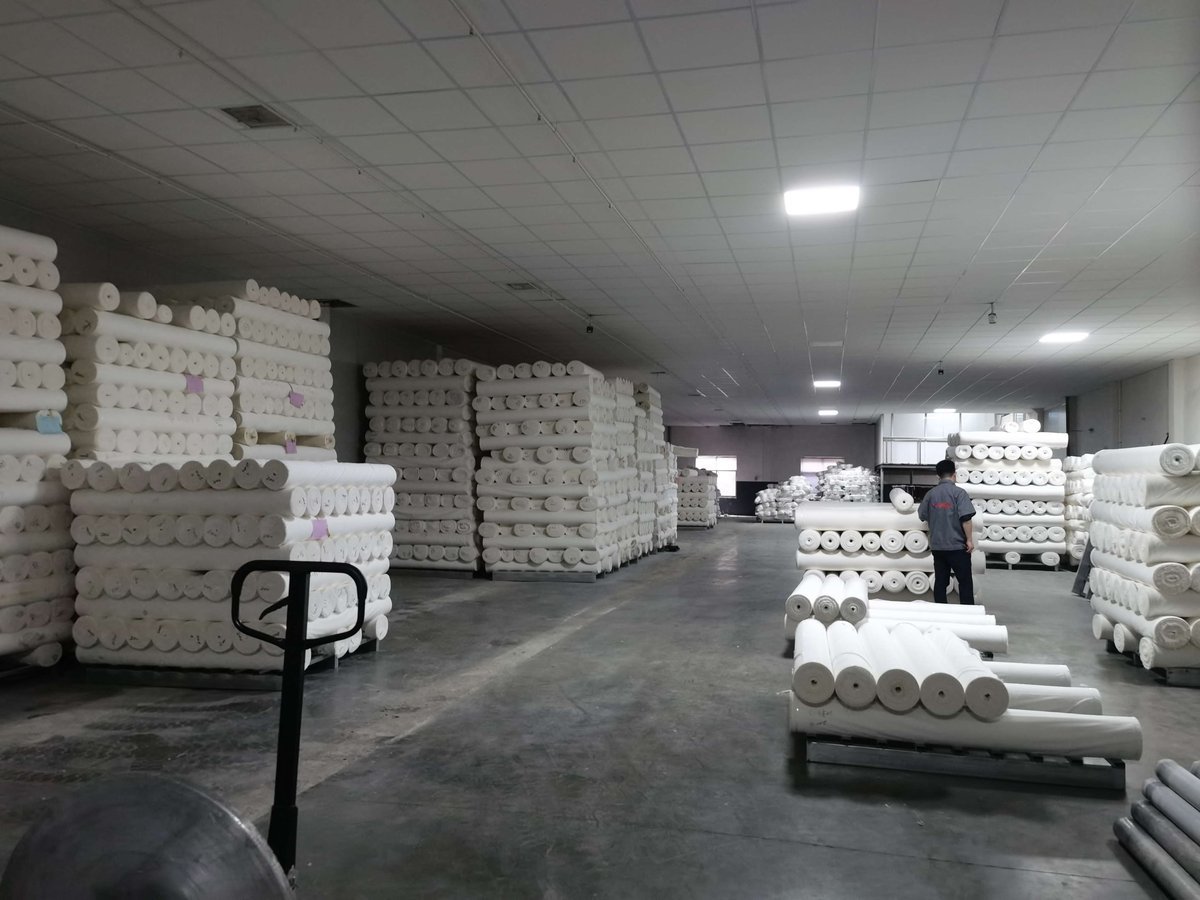
Rolls stored flat, one on another, load the bottom layer with the weight of the whole stack. On soft or bulky cloth the lowest three or four rolls deform, and the deformation is a set rather than a spring-back. Pallets and racking spread that load; stack height should be a written limit.
Conditions matter as much as the stack: off the floor, clear of walls, out of direct sun, and in a space where the dew point does not swing hard enough to condense on the film. A wrap that traps moisture is worse than an open, ventilated cover.
Packing for Export and Container Loading
The usual export pack is one bag per roll, ends protected, then a woven outer bale or a carton, marked and listed. The bag keeps dirt off, but the ends take the handling damage, so end protection is worth more than thicker film in the middle.
In the container, rolls travel flat or on end. Flat loading puts stack weight on the lower rolls for a long sea voyage; on-end loading needs a floor that can take point loads. Desiccant and a liner deal with condensation, and the loading pattern should be agreed before the first shipment. Nylon stretches further than polyester under the same load, which is one more reason the comparison in polyester versus nylon belongs in the packing decision.
Marks, Labels and Lot Linking
A label inside the bag and a matching mark outside it carry one data set: article, lot, roll number, shade reference, measured length, gross and net weight. Without a measured length per roll, a packing list is a promise rather than a record.
Roll numbering is also the mechanism that keeps one garment's panels inside one dye lot. The same approval chain that locks a shade master makes roll-level linking possible, as our article on shade variation and colour approval sets out.
Writing the Put-Up Clause
A put-up clause that survives a dispute is short and numerical. The lines that carry weight:
- Length per roll and its tolerance, stated as a measured value per roll rather than an average across the shipment.
- A maximum net roll weight, agreed against how the goods will be handled at the far end.
- Tube inside diameter and wall thickness, matched to the unwinding stand the buyer uses.
- Winding face and winding direction, named, with an interleaf requirement where the face is coated or printed.
- Build acceptance, refusing telescoped, dished, starred or oval-core rolls at inspection.
- Packing detail: bag type, end protection, bale or carton, and the shipping marks to be applied.
- Label data set, so the roll number on the bag matches the packing list and the shade lot record.
Frequently Asked Questions
What roll length should we specify?
Match it to the marker and to the handling limit. A 50 m roll suits small cutting rooms and heavy coated cloth; 100 m or 100 yd suits production runs on mid-weight woven. The tolerance matters more than the nominal figure, because a plus-or-minus swing around 100 m changes the roll count and the freight plan.
Does face-in winding protect the fabric?
It protects the face from scuffs and dust, and it hides that face from inspection until the roll is opened. For plain dyed woven polyester, face out with a clean bag is usually enough. For coated, printed and high-lustre cloth, face in with an interleaf is the safer default, confirmed per order.
How many rolls fit in a container?
It depends on outside diameter, roll weight and whether the load travels flat or on end, so it is calculated per order rather than quoted as a standard. Diameter is the number to fix early: a bag that is sized before the diameter is agreed is a bag that will not fit.
Are roll creases repairable?
Sometimes, and never dependably. Steaming or a tumble can lift a light pressure mark on a plain weave, but a thermal set taken during a long warm transit usually survives. Prevention is cheaper: stack height limits, pallets, and a winding tension that does not compress the face.
Next Step
Fix the put-up before the first roll is wound: length and tolerance, weight ceiling, tube, winding face, build acceptance, packing and label data. Send the construction, the destination and the handling method and we will propose a put-up that fits the marker and the container plan. Where a claim has already landed, send the roll number and the inspection photos and we will read them against the packing record.