Yarn-Dyed vs Piece-Dyed: Choosing the Colour Route for Woven Polyester and Nylon
A checks-and-stripes program can reach the same shelf two ways: dye the yarn first and weave the pattern in, or weave the greige first and run the whole piece through the dyehouse. Buyers call both "the same fabric" until the lab dips, lead times and minimums start arriving, and the two routes stop looking interchangeable. The choice is made upstream, at the design stage, and it quietly prices the program.
Two Routes to the Same Shelf
Yarn-dyed means the filament is dyed in package form before it ever sees a loom; the pattern is built pick by pick, colour by colour. Piece-dyed means the fabric is woven greige in one construction and the entire roll is dyed afterwards in a single solid shade.
The split is not aesthetic preference. It follows from pattern geometry, colour count, order size and how much schedule risk the program can carry. A yarn-dyed gingham and a piece-dyed poplin share a mill, but they barely share a process.
How Yarn-Dyeing Actually Works
The route starts with package dyeing: filament yarn wound onto perforated tubes, dye liquor forced through the package inside an autoclave. Each colour is dyed as its own lot, then the packages are rewound onto weaving tubes.
Weaving then sets the design. Warps may be sectional-wound with the stripe sequence already laid in; the weft inserts the checks. Every colour change is a physical yarn change, which is why pattern complexity costs machine time before it costs anything else.
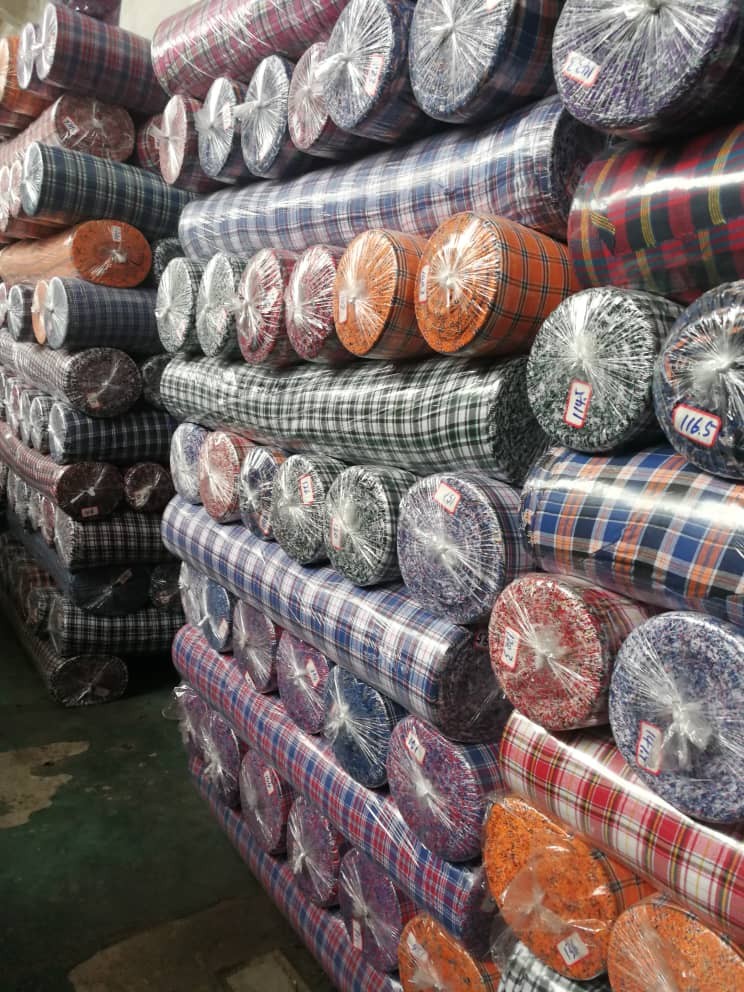
Package-dye lots can also drift against each other — one lot of navy weft against another shows up as barré, the horizontal banding defect that piece-dyed fabric never carries in the same way. Sorting yarn lots by dye date, and keeping one lot per weft colour across the full width, is standard practice for controlling it.
How Piece-Dyeing Actually Works
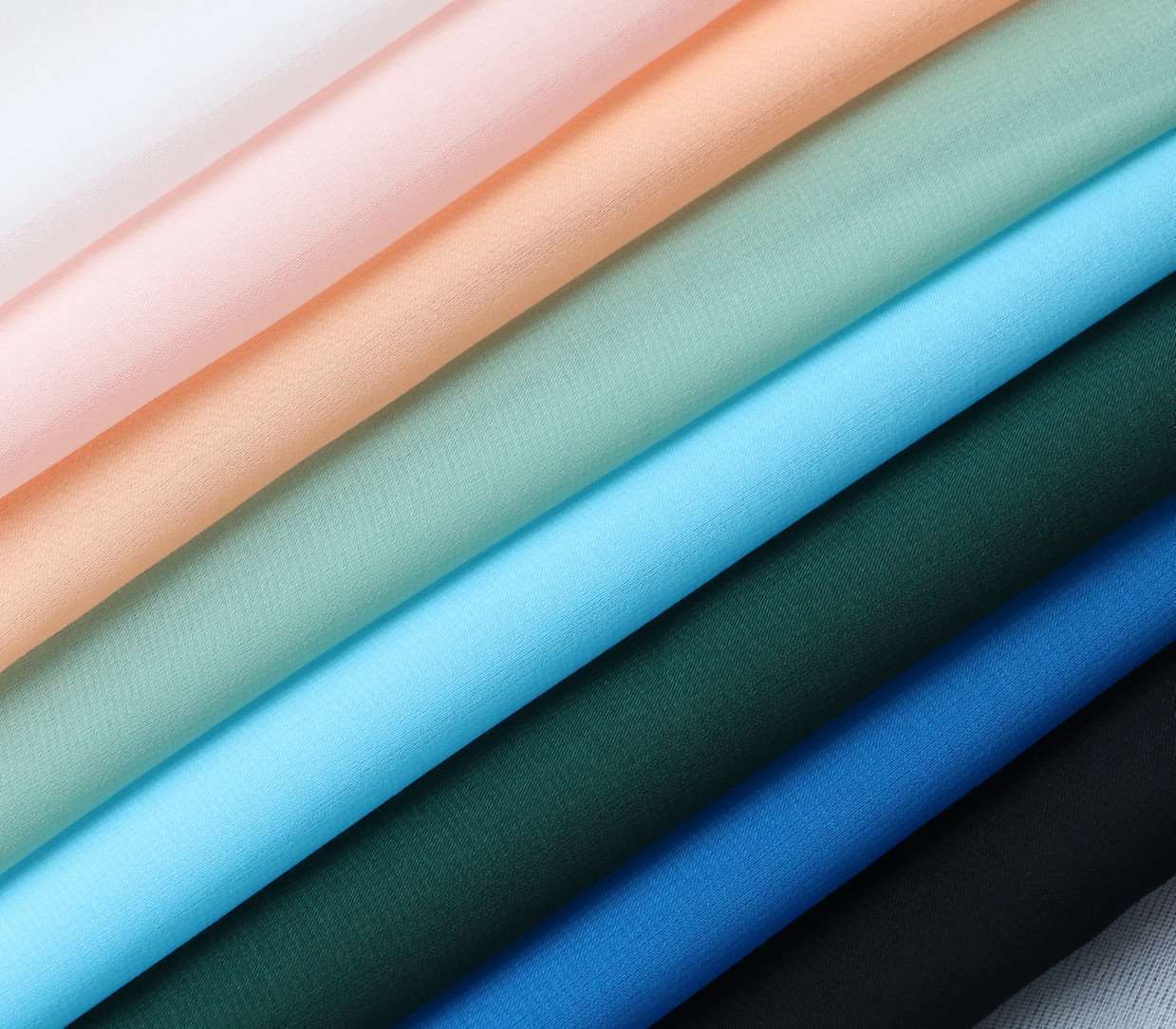
The mill weaves a greige fabric in one construction, often running the same base cloth for dozens of different articles. The roll is then pretreated and dyed as a full piece — for polyester, typically under high-temperature exhaust conditions, as covered in the dyeing process route.
One roll, one shade, one dye lot. The pattern, if any, comes later: a print, a finish or a coating, not the dyehouse.
The Real Difference: Colour Is Locked In Early or Late
Yarn-dyeing commits colour before weaving; piece-dyeing commits it after. That single sequencing difference drives everything else — minimums, lead time, colour continuity, lab dip logic and where mistakes get caught.
Yarn-dyed colour sits inside the yarn, so both faces carry the same depth and abrasion cannot expose an undyed core. Piece-dyed colour sits on the surface of the woven structure; it is uniform, but only one layer deep.
Yarn-Dyed vs Piece-Dyed, Line by Line
| Dimension | Yarn-Dyed | Piece-Dyed |
|---|---|---|
| Colour position | Inside the yarn, both fabric faces identical | On the surface of the woven structure |
| Colour approval | Yarn or woven blanket sample before bulk loom time | Lab dip on greige, then bulk dye lot |
| Shade drift risk | Across dyed yarn lots, visible as weft barré | Across dye lots, controlled by tolerance clauses |
| Minimums | Higher — each colour needs a yarn lot and loom set-up | Lower — greige is pooled, dye lots are flexible |
| Lead time | Longer — package dye, rewinding, then weaving | Shorter — greige can be woven ahead |
| Cost driver | Number of colours and loom set-ups | Construction weight and dye depth |
| Leftover fabric value | Low — pattern is specific to the program | Higher — undyed or overdyed stock is reusable |
| Solid shades | Technically possible, commercially senseless | The default route |
Minimums and Lead Times Are Not Negotiable Downstream
A five-colour check means five package-dye lots, five yarn inventories and a loom threaded for that one design. Mills therefore protect themselves with higher minimums and shorter re-order windows: once the dyed yarn is used, the same weave needs fresh yarn matching the original lots. A three-colour design already carries three separate dye lots; a seven-colour plaid is a logistics exercise as much as a weaving job.
Piece-dyed programs run the other way. Greige is woven continuously and dyed to order in lots, so a mill can accept smaller calls and hold undyed stock against re-orders. When the schedule is tight, that flexibility is worth more than a couple of cents per metre.
Colour Fastness and Abrasion: Inside vs On Top
Yarn-dyed polyester and nylon generally show strong fastness to crocking because the colour is locked in the filament during package dyeing rather than fixed on the fabric surface afterwards. Piece-dyed equivalents can match it, but only with correct dye selection and thorough reduction clearing — the step explained in the HT exhaust route.
Abrasion behaves differently over time. Brushed or heavily abraded surfaces eventually wear the dyed skin of a piece-dyed fabric, while a yarn-dyed construction shows the same shade underneath. For articles that get sand-washed or peached — covered in the hand-feel finish guide — that depth difference is the reason the route is chosen early.
Matching Colours: Blanket vs Lab Dip
Yarn-dyed approval runs through a woven blanket: a small sample loom weaves the actual design in the actual dyed yarn, so what you approve is what the loom will run. Piece-dyed approval runs through a lab dip on greige, and the bulk piece can still drift from the dip — the reason buyers add lot-by-lot tolerance clauses, as discussed in the shade approval article.
Neither is harder by nature; they fail differently. A blanket that passes can still hide weft-lot drift across width; a lab dip that passes can hide metamerism under the store's lighting. Both risks are manageable — but only if the spec names which approval artefact governs, and what happens when the bulk drifts from it.
Cross-Dyeing: The Third Route Nobody Quotes First
Polyester and nylon take different dye classes — disperse for polyester, acid for nylon. A construction blending both can go into one bath and come out two-tone without printing, because each fibre picks up only its own dye class.
Cross-dyed looks are common on cationic-dyeable polyester woven together with regular polyester in one weave. The catch: colour control is indirect, the palette is limited, and the effect only reads at certain densities — so treat it as a design decision, not a cheap substitute for yarn-dyeing.
Where Prints Fit In
Prints are neither route and compete with both. A digital or rotary print can imitate many checks at low minimums, but the ink sits on the surface, fine yarn-dyed texture is lost, and colour count stops being a cost driver entirely.
Designs that rely on weave texture — a dobby stripe, a tone-on-tone twill — only exist yarn-dyed. Designs that are pure colour geometry can go either way, and volume decides.
Writing the Spec So the Route Cannot Drift
- State the route explicitly: "yarn-dyed" or "piece-dyed" in the specification line — never assume the mill reads the swatch correctly.
- Fix the colour count: number of warp colours and weft colours, listed separately.
- Define approval: woven blanket for yarn-dyed, lab dip on named greige for piece-dyed, with light source and tolerance per the ΔE approach.
- Cap weft barré: reference the 4-point inspection grade and name barré as a defect with a limit, not a discussion.
- Set fastness minimums: washing and crocking grades per the test report guide, route-neutral but verified differently.
- Tie re-orders to lot retention: specify whether later calls must match retained yarn lots or only the original approved sample.
Frequently Asked Questions
Is yarn-dyed fabric always more expensive?
Not always — only usually. At volume, a two-colour yarn-dyed check can price close to a piece-dyed print, and it skips print set-up. The reliable cost driver is colour count and loom time, not the label itself.
Can a piece-dyed fabric fake a yarn-dyed look?
A print can copy the colour geometry, but not the structure. Both faces matching, colour surviving abrasion and weave-texture stripes are physical properties of yarn-dyeing, not print effects.
Which route is faster to re-order?
Piece-dyed, because greige can be held in stock and dyed to match on short calls. Yarn-dyed re-orders depend on whether the original dyed yarn lots still exist; once they are gone, matching starts again from blanket.
How do I check which route a swatch uses?
Unpick one yarn at the cut edge. If it is coloured along its full length, the fabric is yarn-dyed. If the colour fades where the yarn sat deepest in the weave, it is piece-dyed — the surface skin is all there is.
Get the Route Right Before the Quotation
Send the design, the colour count and the schedule together — we can quote both routes on polyester and nylon woven constructions, in dyed, printed or finished form through long-term partner mills, and tell you where the break-even volume sits. Start with the inquiry form, or browse sportswear and the polyester sourcing guide for the constructions that suit your end use. If the program sits between the two routes, say so in your first message to us — break-even analysis works best before the swatch stage, not after it.