Warp Preparation and Sizing in Woven Polyester and Nylon: Add-On, Desizing and Specification Writing
Warp sizing is the step nobody sees on a fabric sample and everybody pays for downstream. Before a polyester or nylon filament warp can run on a loom, its ends are coated with a temporary film that lets them survive tension, abrasion and repeated shedding. That film is washed out again in desizing. How much goes on, and how completely it comes off, shape greige weight, finished hand, dye uniformity and the effluent load. Here is how the chain works and how to write it into an order.
Why the Warp Needs Protection at All
A warp end is stretched under constant tension while the loom opens and closes a shed thousands of times per metre of cloth. Unlike weft, which is inserted once and then left alone, every warp yarn rubs against heddles, reed and neighbouring ends at the same contact points. Continuous filaments are smooth and have little cohesion between them; without a binder, individual filaments lift, fuzz and break.
Sizing is therefore a temporary processing aid, not a finish. It exists only to carry the yarn through weaving and is deliberately removed before dyeing. Buyers rarely see it, yet it sits behind defects that surface later in the finished roll, so the clause belongs in the construction specification, not a finishing note.
Warping: Building the Beam Before Sizing
Warping comes first. Hundreds of packages are creeled and wound onto a warper's beam at a fixed number of ends and a controlled, even tension. Any tension spread is locked in here: tight and slack ends behave differently in the size bath, on the loom, and finally as streaks or fine weft-direction barré in dyed cloth.
The sized beam is then reassembled into the loom beam. Ends per inch are fixed here, so warp preparation is where construction drift begins. The density-to-weight relationship behind those numbers is set out in the ends and picks article, and width behaviour downstream in the width and grain guide.
What the Size Film Actually Does
A size bath deposits a thin polymer film that binds the filaments of each end together, lays protruding hairs flat and adds a lubricating surface. Three things improve at once: abrasion resistance at the reed, strength under shedding tension, and shed cleanliness. What matters is the add-on, expressed as a percentage of dry yarn mass.
Add-on is a range, confirmed per order according to denier, filament count and loom type. The filament route matters here, since flat FDY and textured DTY take up size differently, as the filament specification article explains. Naming the yarn but not the sizing route leaves the largest variable unwritten.
Size Pick-Up and the Desizing Link
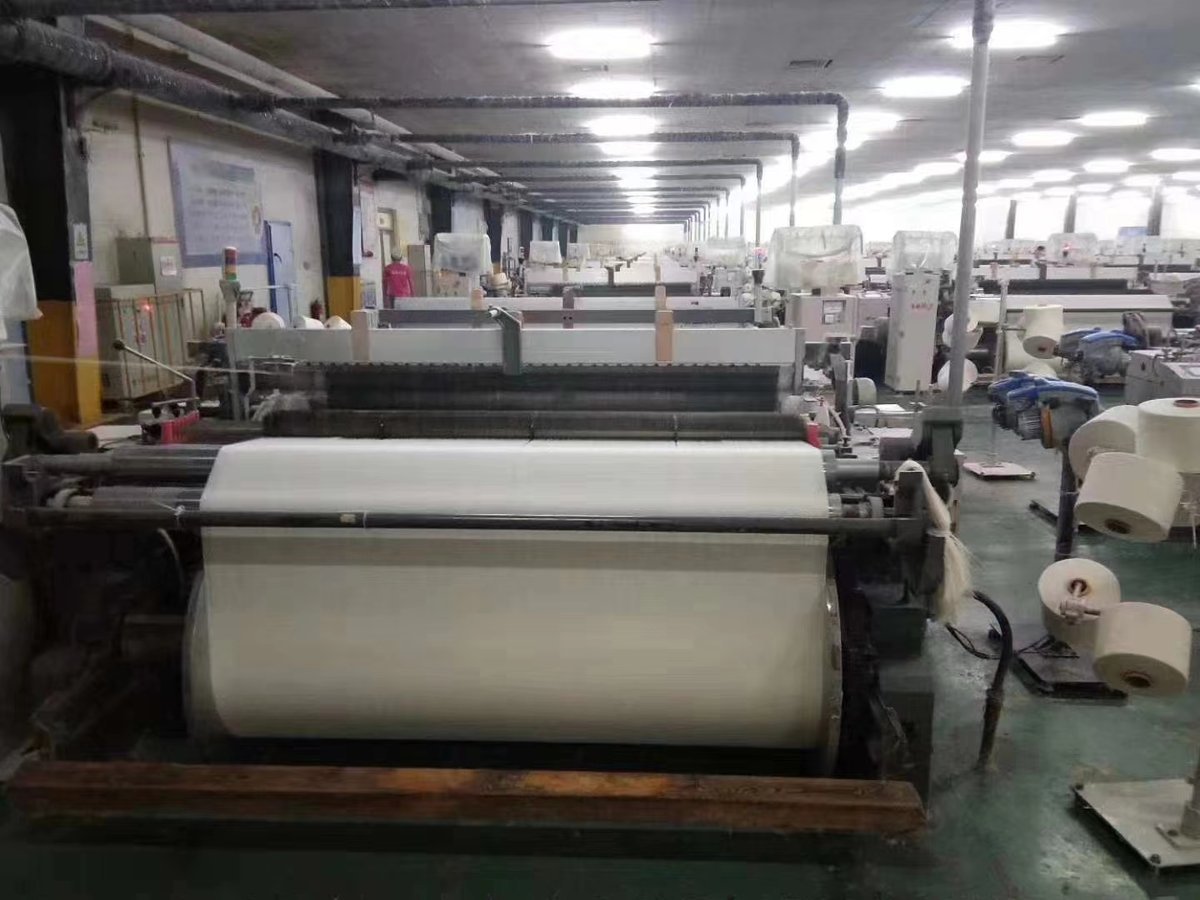
Every kilogram of size applied has to come off again. Desizing is the first wet step in pretreatment, ahead of scouring and colour, and its difficulty rises with add-on and with how firmly the film is fixed. An over-sized warp weaves cleanly but resists removal; an under-sized warp desizes easily but may not survive the loom.
Residual size is the failure mode buyers see. Left in the cloth, it blocks dye penetration, prints as pale streaks, stiffens the hand and weakens coating adhesion. The pretreatment sequence is set out in the polyester dyeing guide, and bond failures in the coating selection article. Both begin with a desizing step nobody specified.
Size Chemistry for Filament Yarns
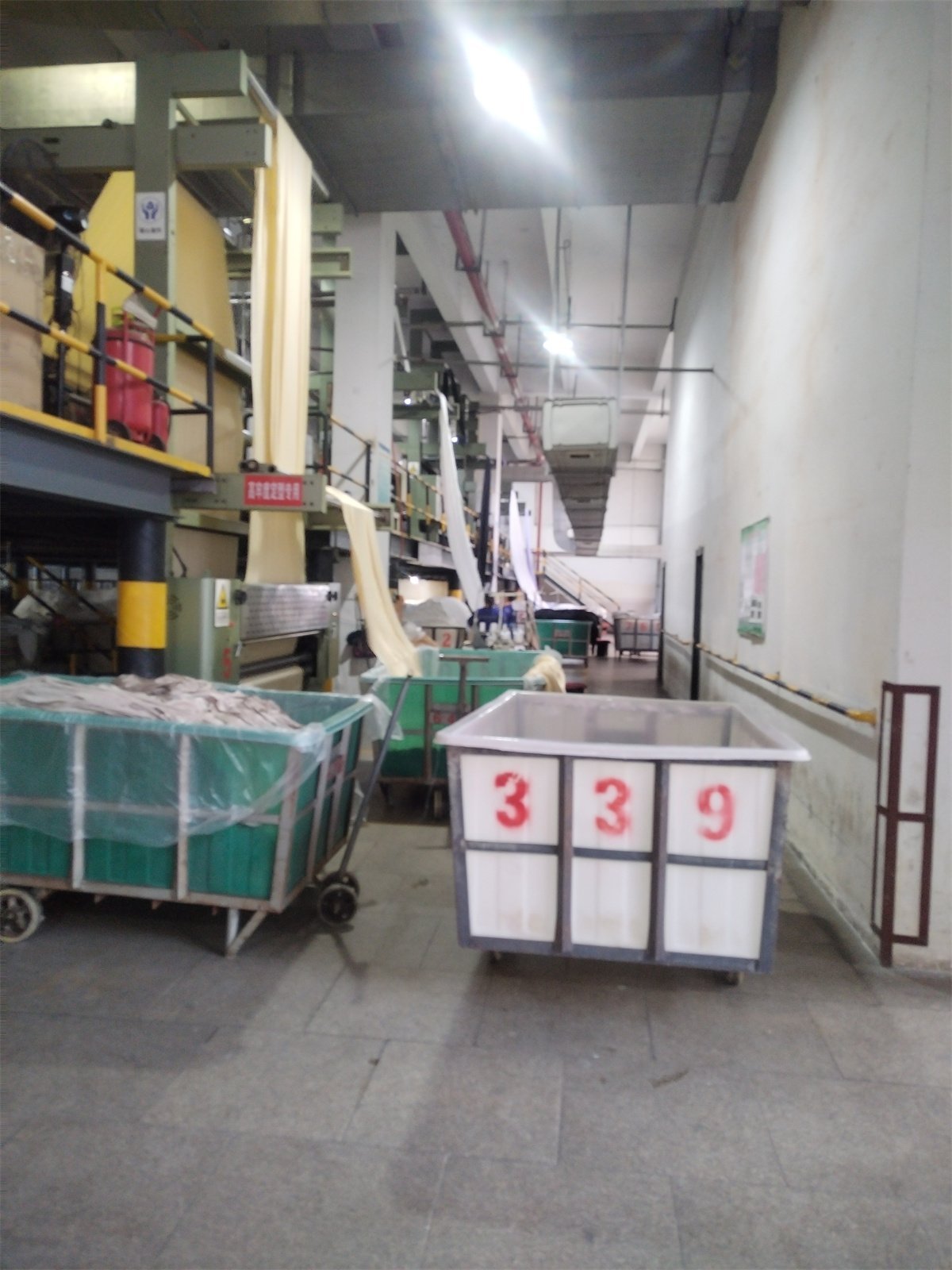
Filament polyester and nylon warps are normally sized with water-soluble synthetic polymers: acrylic-based sizes, polyvinyl alcohol blends, or water-dispersible polyester sizes, often followed by a light after-wax for lubrication. They form a flexible film on smooth filaments and are removed in hot water or mild alkali without aggressive chemistry.
That differs from staple-yarn sizing, where starch-based sizes and enzymatic desizing are common. The distinction matters when a mill switches a warp between yarn families: a bath tuned for one will not behave the same on the other. Ask which size family runs on your program and how it is removed; that answer is confirmed per order, not assumed from a generic process sheet.
What Moves Sizing and What to Specify
Each row moves the process in a known direction. The point is not that every row must be maximised, but that the rows your program depends on are named before the warp beam is built.
| Factor | Direction of Effect | What to Write into the Order |
|---|---|---|
| Size add-on | Higher add-on protects weaving, raises desizing load | State a target add-on range, confirmed per order |
| Size chemistry | Synthetic films remove more cleanly on filament yarns | Name the size family and the removal route |
| Yarn texture | Textured DTY takes up size differently from flat FDY | Name the filament route per direction |
| Beam tension | Uneven tension becomes streaks after dyeing | Require even tension; state ends per inch |
| Weight basis | Greige weight includes size; finished weight is lower | State which stage the quoted weight refers to |
| Desizing completeness | Residue blocks dye and stiffens the hand | Require a desizing check before dyeing |
| Loom route | Higher-speed looms demand more warp protection | Name the weaving route with the mill |
| Effluent load | Chemical oxygen demand rises with add-on | Ask how the desizing liquor is handled |
How Sizing Shows Up in Fabric Weight
Greige cloth carries its size, so a roll weighed off the loom reads heavier than after desizing, scouring and heat setting. When a quotation states a weight without naming the stage, the numbers are not comparable; the difference is size plus spin finishes and oils removed in pretreatment.
This is why a price per kilogram and a price per metre can disagree between suppliers claiming the same construction. The greige-to-finished shift is explained in the GSM guide and the quotation breakdown. Fix finished weight as the contract reference; keep greige weight as a mill-side control figure.
Hand Feel and Dye Uniformity After Desizing
Incomplete desizing rarely appears as one fault. It shows as a firmer hand than the approved sample, shade drift between centre and selvedge, or faint bars visible only after dyeing. Because residue is uneven, one approved lab dip can pass while bulk rolls drift.
Test the finished fabric, not greige, and read any shade complaint alongside the desizing record. Lot-to-lot control is covered in the shade variation guide, and finishes that mask a stiff base in the finishing routes guide. A softener cannot replace clean desizing.
Weaving Efficiency and Warp Breakage
The mill sizes enough to keep warp breaks down, since one broken end stops the loom and leaves a mark. Insufficient add-on shows as filament fuzz, clinging ends and broken warp, graded later as weaving defects. Oversizing brings a stiff warp that sheds poorly and can crack at the reed.
Defect families tracing back to warp preparation are set out in the four-point inspection guide, and what each inspection stage can catch in the two-stage inspection article. Warp-related faults are cheapest to correct at the beam, before any cloth is woven.
Desizing Effluent and the Load It Carries
Desizing liquor carries most of the applied polymer, so its chemical oxygen demand scales with add-on and size chemistry. Water-soluble synthetic sizes are easier to recover or treat than heavily fixed films, which makes the size family a purchasing question, not only a mill-side detail.
Ask how the desizing bath is handled and whether size recovery is practised on your line. Do not accept a blanket environmental claim in place of a process answer; parameters are confirmed per order. Where a program carries a wastewater requirement, write it into the same clause as the size family so the two are chosen together.
Writing the Specification: A Seven-Line Clause
- Name the yarn route — polymer, denier, filament count, and FDY or DTY per direction.
- State ends per inch and total ends, and require even warp beam tension across the width.
- Name the size family and removal route, rather than leaving it to the mill's default bath.
- Set a target add-on range, confirmed per order, instead of one fixed universal figure.
- Require a desizing check before dyeing, and state how residue is assessed and recorded.
- Fix finished weight as the contract figure, with greige weight recorded separately by the mill.
- Add any wastewater or size-recovery requirement to the same clause, not a later annex.
Frequently Asked Questions
Does a higher size add-on mean better fabric?
No. It means a safer warp and a harder desizing step. Past what the loom needs, extra size only adds residue, greige weight and effluent load, and the finished cloth may be stiffer than the approved sample.
Can desizing residue be corrected after dyeing?
Only partly. Re-scouring recovers some hand and levels some shade, but dye taken unevenly cannot be redistributed, and a coated or printed fabric has a layer bonded to the residue. Specify the desizing check upstream.
Is sizing different for nylon and polyester warps?
Broadly similar, since both are smooth continuous filaments, but nylon's higher moisture uptake and elasticity change film flexibility and drying. Confirm the size route per fibre family rather than assuming one bath serves both.
Why does my greige weight differ from the finished weight?
Because greige cloth still carries size, and pretreatment removes it with spin finishes and oils before heat setting. Compare quotations on finished weight only, and ask which stage each supplier measured.
Put the Sizing Clause in the First Enquiry
Send the construction, the end use and the yarn route together, and we can quote woven polyester and nylon programs with the warp preparation clause in the order: size family, add-on range and desizing route agreed before the beam is built, with dyeing and finishing at long-term partner mills. Start with the inquiry form, and read the polyester and nylon comparison for how the two fibre families split on moisture and elasticity. If a previous program showed streaks or a stiff hand, describe the symptom in your first message to us: the direction of the mark usually identifies whether sizing or desizing caused it. For end-use context, the outdoor fabric selection, the polyester sourcing guide and the seam behaviour of the finished cloth cover what each application tolerates.