Down-Proof Construction and Lining Pairing in Woven Polyester and Nylon: Density, Calendering, Coating and Specification Writing
A shell that holds its fill is not one property but four decisions: construction, finish, fill and lining. Change any one and a fabric that passed a lab escape test can fail in a finished garment. This article sets out how woven polyester and nylon shells are built to contain fill, where each route breaks down, and what to write into an order. All values are indicative and confirmed per order.
What Down-Proof Actually Measures
Down-proof describes resistance to fill migrating through a shell, not a fibre type or a fixed score. The shell stays 100 percent woven polyester or nylon; down or synthetic wadding is a garment fill, separate from the fabric. Testing counts filaments or plumules working through a specimen after controlled rubbing, tumbling or needle penetration.
Three escape paths matter: yarn interstices, needle holes and stitch lines, and stiff fill ends that pierce a surface with no open pore. A fabric specification controls only the first. Methods in the EN 12132 feather and down proofness series, or an agreed tumble-box count, compare only when sample size, fill mass, cycle count and counting rule are stated. Results are available on request.
The Three Construction Routes
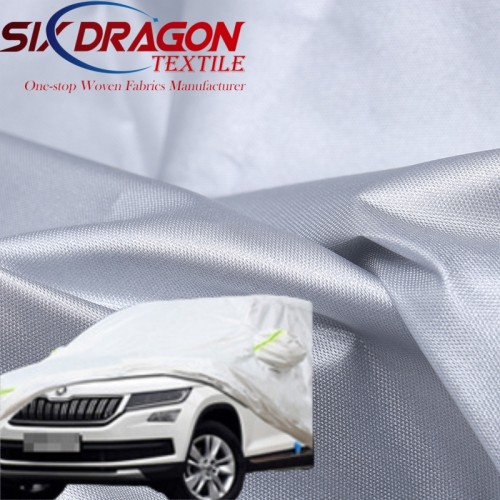
Three routes are used, singly or combined. A high-density plain weave closes pores with fine filament yarns at high ends and picks. Calendering flattens yarn crowns under heat and pressure. A coating or film lays a continuous barrier over the interstices. Each blocks fill by a different mechanism, so each fails differently.
Density is permanent but stiffens the hand, raises GSM and lowers air flow. Calendering is a thermoplastic deformation that can relax after washing. A coating gives the tightest barrier, yet trades away breathability and adds peel-strength risk. The choice follows the fill, garment construction and after-care level, confirmed per order.
Cover Factor: What the Numbers Tell You
Thread density alone does not describe the pore. A geometric cover estimate combines ends and picks with a yarn-diameter term from denier, so a fine fully drawn yarn leaves smaller openings than a coarse textured one at the same count. The ends and picks article gives the arithmetic; the filament yarn specification guide explains why yarn route and filament count change effective diameter.
Plain weave reaches the highest density because each yarn crosses at every intersection; twill and satin float over several yarns and open longer channels. The weave selection guide compares them. Cover factor is a screening number, not a proofness result: it says nothing about needle holes or seam type. Confirm on a tested sample.
Calendering and Heat Setting: A Surface That Can Relax
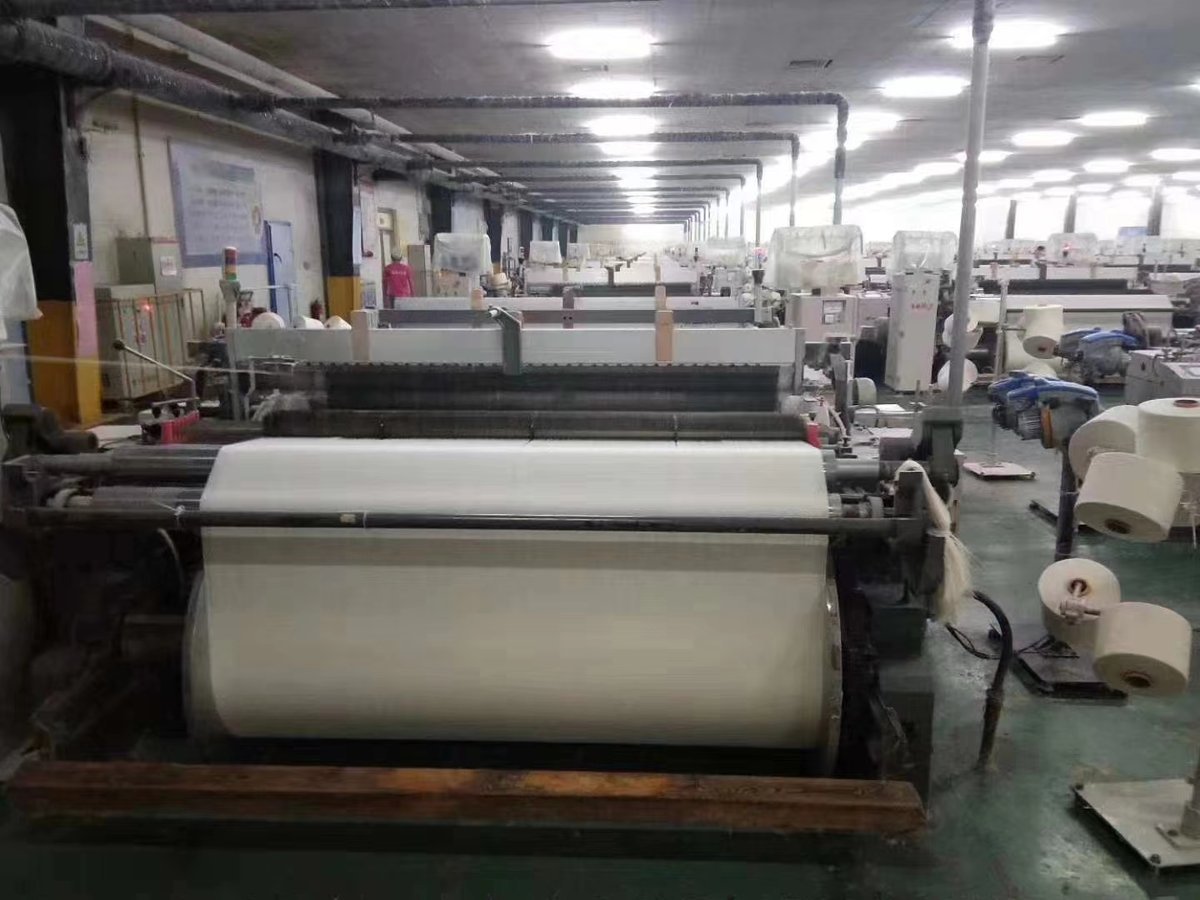
Calendering passes cloth through heated rollers so filament crowns flatten and the surface closes. On thermoplastic polyester and nylon that set can partly recover when the garment is wetted and heated again. Calendering after dyeing risks shifting lustre; doing it before dyeing risks being undone by wet processing. Agree the sequence on an approved sample.
The heat window is narrow: enough to flatten the yarn without glazing or stiffening. The heat and care guide bounds ironing limits, the shade approval guide explains why a flattened surface reads a different depth under the light box, and the hand-feel routes guide compares calendering with coating. Re-test after the agreed wash cycle.
Coating as a Barrier: Add-On, Hand Feel and Peel Strength
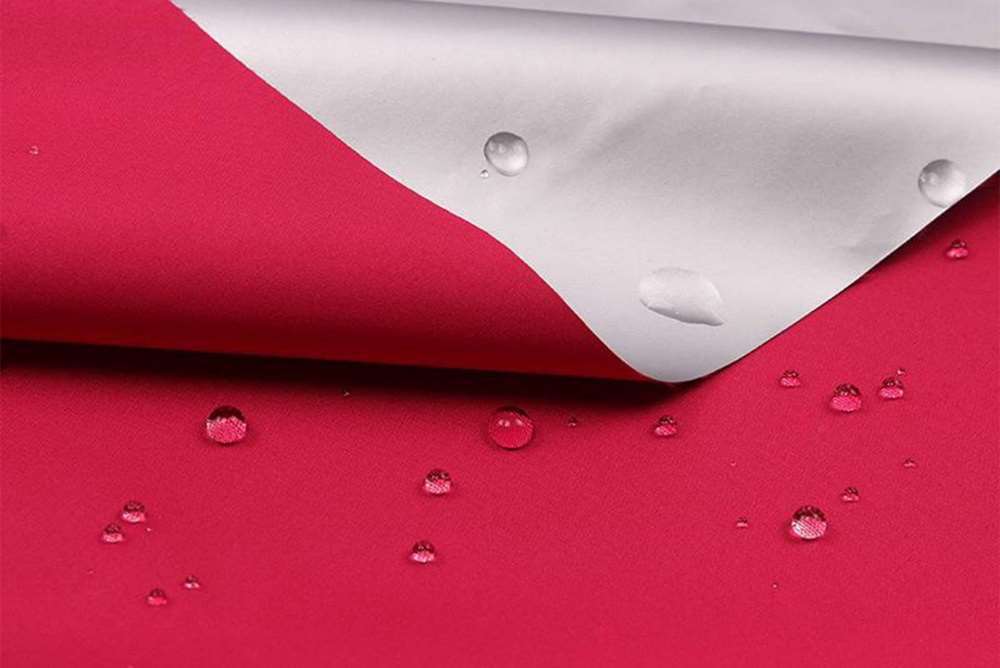
A clear PU, pigmented or microporous layer seals the weave without relying on density. Add-on is not linear: a first coat changes hand and air flow sharply, while later coats add weight faster than barrier performance. Single-side and double-side application differ in cutting and sewing. The coating selection guide covers the four families and three peel or bond failure modes.
A continuous layer cuts air permeability and adds adhesion risk under washing and flexing, as the functional finishes guide sets out. Coated shell and lining must share the same grain, or the barrier cracks along the stitch line. Coating weight, face side and peel strength are confirmed per order.
Down Fill vs Synthetic Wadding: Acceptance Levels Differ
The fill drives test severity. Down clusters and feathers carry stiff quill points that pierce small openings, so a shell holding synthetic wadding may still leak under a down fill. Synthetic polyester wadding is continuous and blunt by comparison, but fine deniers and static still drive migration.
Keep the fibre boundary clear: shell and lining are woven polyester or nylon, while the fill is a garment component, not a fibre blend in the fabric. Do not reuse one acceptance level across two fills. State the fill type and approximate linear density in the test request, test the actual fill, and confirm the level per order.
Lining Pairing: The Second Barrier and Slippage Risk
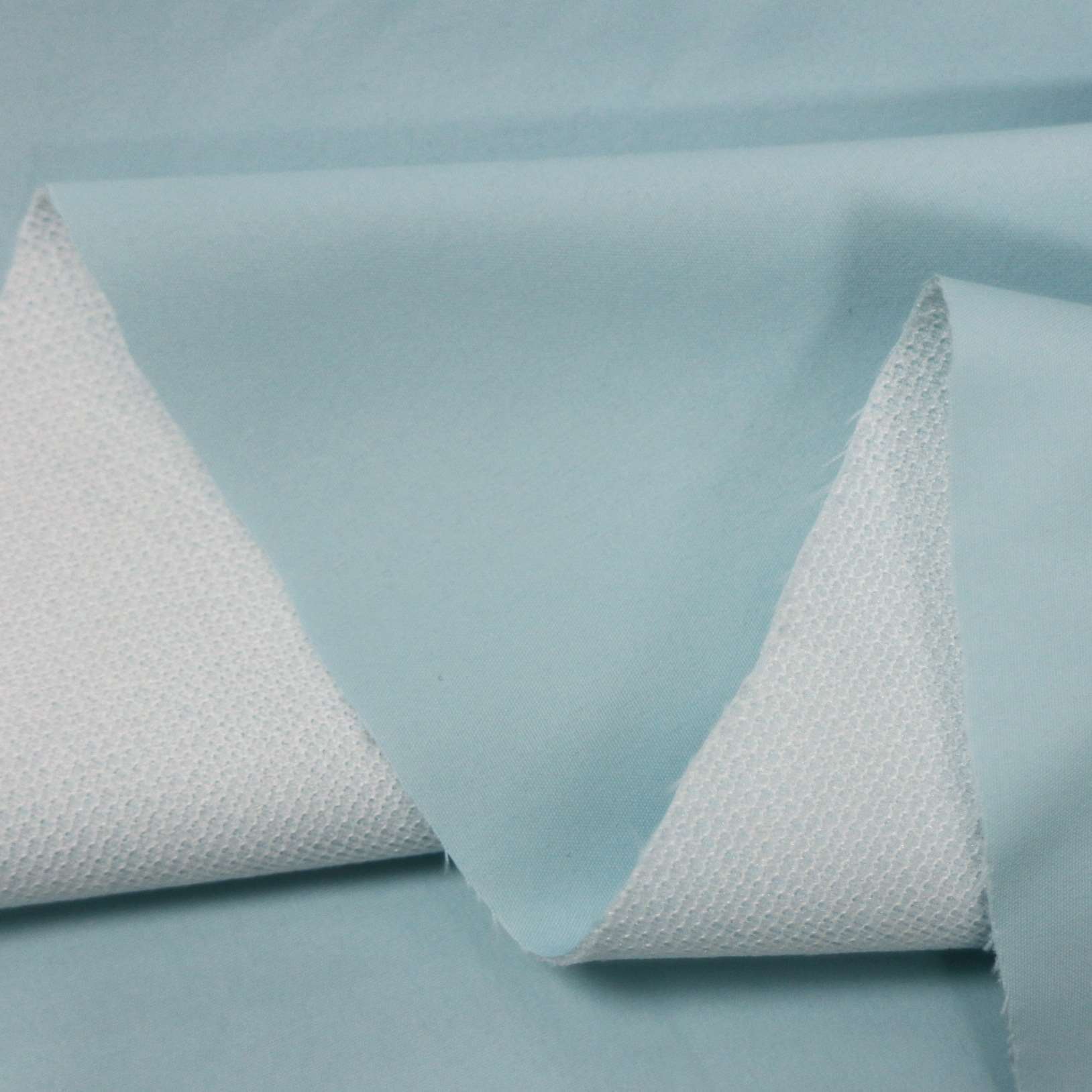
A lining is a second, independent barrier. It needs density to stop fill that crossed the shell, yet a smooth, low-friction lining lets yarns slide, raising seam slippage and letting fill shift between quilt lines. The seam behaviour article sets out ASTM D1683 and ISO 13936 and the controlling levers. Lining GSM and weave belong in the same clause as the shell.
Match the two layers before bulk. Differing relaxation shrinkage pulls quilt lines out of register after washing; the test report guide covers dimensional results and the width and grain guide covers bow and skew. A bonded lining changes both hand and permeability, so approve the pair together.
Air Permeability Versus Fill Containment
Every route that closes a pore also closes an air path. Higher cover factor reduces permeability, calendering reduces the surface path, and a film reduces it sharply. No construction maximises both containment and air flow. Specify the priority by garment zone and treat any figure as indicative, measured on finished, washed cloth.
Method matters as much as the result. Air permeability is a volume rate per area at a stated pressure differential, so figures from different pressures are not comparable; name the method and pressure in the specification. The GSM guide relates density to end use. Shell, fill and lining are a system decision, not a single-fabric one.
Comparing the Routes
The table compares routes. Values are not fixed: handle, permeability and proofness depend on construction, finishing and fill, confirmed per order.
| Route | How it blocks fill | Main cost | What to write into the order |
|---|---|---|---|
| High-density plain weave | Fine yarns close interstices at high density | Stiff hand, higher GSM, lower air flow | Denier, filament count, ends and picks, cover estimate |
| High-density twill | Higher density with a diagonal face | Floats open longer channels | Weave, density, face side, approved sample |
| Schreiner calender | Flattened crowns close surface pores | Relaxation after washing, lustre shift | Dyeing sequence, setting window, post-wash re-test |
| Clear PU coating | Continuous film seals the weave | Air flow loss, adhesion risk | Coating family, add-on, face side, peel strength |
| Pigmented coating | Film plus opacity | Added weight, stiffer hand | Add-on per side, colour approval on coated cloth |
| Microporous film or laminate | Barrier with a moisture path | Cost, flex cracking, bond failure | Film type, bond strength, wash-cycle retention |
| Bonded lining | Second barrier behind the shell | Slippage, shrinkage mismatch | Lining GSM, weave, slippage limit, pair approval |
| Density plus light finish | Balanced containment and hand | Tight process window | All of the above plus test method and acceptance level |
Writing the Barrier into the Specification
A workable clause names the construction, finish, fill and acceptance point, without promising fixed values.
- State polymer and yarn line — FDY, DTY or ATY, denier and filament count, for warp and weft.
- Give ends, picks and weave, plus a cover estimate and the count system used.
- Name the proofness route — density, calendering, coating or a combination — and its dyeing sequence.
- State finished GSM and usable width with tolerances, confirmed per order.
- Name the test method, fill type, cycle count and acceptance level; require results on the finished, washed sample.
- Specify the lining — polymer, GSM, weave, seam-slippage limit and shrinkage match with the shell.
- Fix the approval sequence — greige, dyed, finished and paired sample sign-off before bulk.
Reading a Proofness Report Without Over-Claiming
A proofness number compares only when the conditions travel with it. Ask for specimen size, fill mass and type, conditioning, cycle count, the counting rule for escaped filaments, and whether the sample was washed. Without those fields, two labs describe different experiments. The two-stage inspection article shows which faults each stage can see.
Do not turn a passing lab result into a blanket promise about finished garments. Needle holes, stitch density, quilt spacing and after-care sit outside the fabric specification; the defects and 4-point grading guide shows where a shell passes inspection and a sewn panel fails. State that the result applies to the tested construction and fill.
Frequently Asked Questions
Does a high-density plain weave alone stop fill escape?
No. Density closes yarn interstices, but needle holes and stitch lines are usually the larger escape path. Specify seam type, needle size and stitch density, and test a sewn panel rather than only a flat swatch.
Can a coating solve proofness permanently?
No. Adhesion, flex cracking and wash-cycle retention all change with use. Ask for peel strength after the agreed wash cycle, re-test the finished cloth, then write the retention requirement into the order.
Can the lining be much lighter than the shell?
It can, but a light, smooth lining raises seam-slippage risk and may show shrinkage mismatch after washing. Pair the two on one approved sample and set a slippage limit.
Can one shell serve both down and synthetic fill?
Often, but not on one acceptance level. The sharper fill demands a tighter result. Name the fill in the test request and approve each combination separately; see the polyester and nylon comparison for the fibre family decision.
Specify the Barrier, Not Just the Fabric
Send the polymer, yarn line, ends and picks, proofness route, fill type and lining together, and we can quote woven polyester and nylon programs against the containment you approved, with dyeing and finishing at long-term partner mills. Start with the inquiry form, and read the polyester and nylon comparison before fixing the fibre family. For context, the GSM guide, the warp sizing guide, the quotation breakdown and the lead time article cover construction, preparation and schedule. If an earlier program held fill in the lab but leaked in the garment, tell us which layer changed in your first message to us: a density change, a calender setting and a lining swap need different fixes.