
Lead Time Structure in Woven Polyester and Nylon Orders: Which Stages Can Be Compressed and Which Cannot
A despatch date is the last link in a chain, not a number set on its own. In woven polyester and nylon, the chain runs from yarn allocation through warping, weaving, greige inspection, dyeing or printing, finishing, testing and packing. Each stage has its own queue, physical minimum and approval loop. Here is where the time goes, which blocks compress, and how to write the schedule into the order.
Why a Lead Time Is a Chain, Not a Date
Yarn becomes a beam, the beam becomes greige, greige becomes dyed or printed fabric, and finishing makes a shippable roll. A date for the whole chain is only as firm as its slowest link, rarely the one buyers expect.
Two clocks run in parallel. The physical clock covers machine time, bath time, drying and heat setting. The queue clock covers waiting for a loom, a dye lot, a lab dip approval or a test slot. Buyers negotiate the first and are delayed by the second.
Stage One: Yarn Allocation and Raw Material
Filament yarn is the first gate. Standard deniers and common filament counts are usually held as running stock; special deniers, cationic or recycled variants, and unusual counts are made to order. The filament specification guide explains why a yarn named only by denier stays under-specified.
This block compresses least. A mill cannot weave a warp not yet spun, and a textured or solution-dyed route adds time before warping starts. Recycled content adds documentation on the same clock, as the sourcing route sets out. Availability is confirmed per order, available on request.
Stage Two: Warping and Sizing
Once yarn is released, ends are creeled, wound onto a warper's beam at controlled tension, sized, and reassembled into the loom beam. Density and total ends are fixed here, so a late construction change rebuilds the beam. The warp preparation article covers the add-on and desizing chain.
Warping is short in machine time but sensitive in sequence: it cannot start before yarn is released, and rushing it creates a tension spread seen later as streaks. Book the beam slot early and lock the construction before it is built.
Stage Three: Weaving
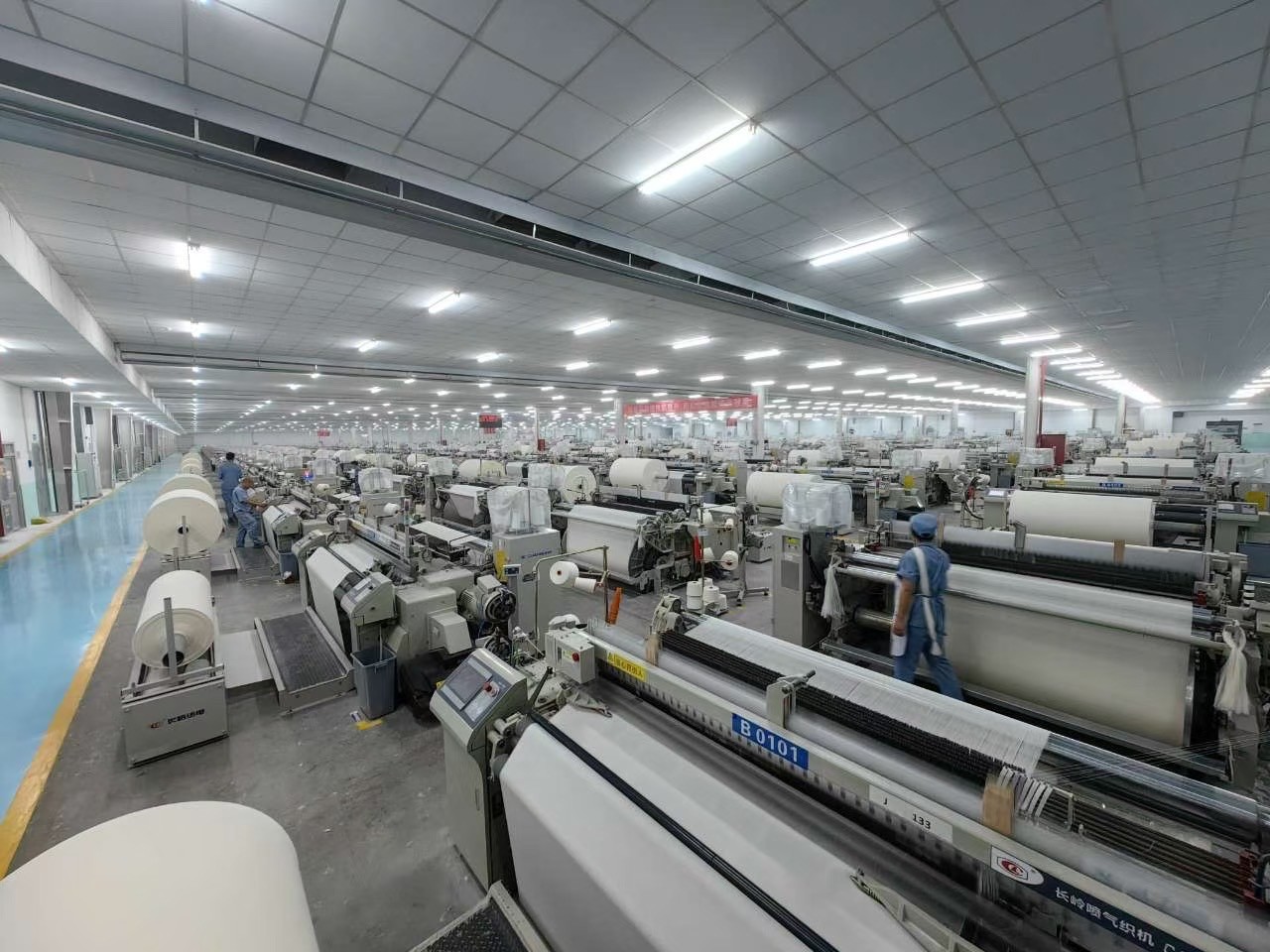
Weaving turns the beam into greige cloth, and duration follows the construction. Ends and picks per inch, loom speed, width and weave all change output per shift; the geometry is in the ends and picks article. A dense high-count construction takes longer per metre than an open plain weave.
Loom allocation is the queue risk. A specific width or jacquard arrangement competes for limited machines, and a changeover costs output nobody wants to absorb. The width and grain guide explains why width is fixed upstream. Reserve the loom slot when the order is placed.
Stage Four: Greige Inspection and Holding
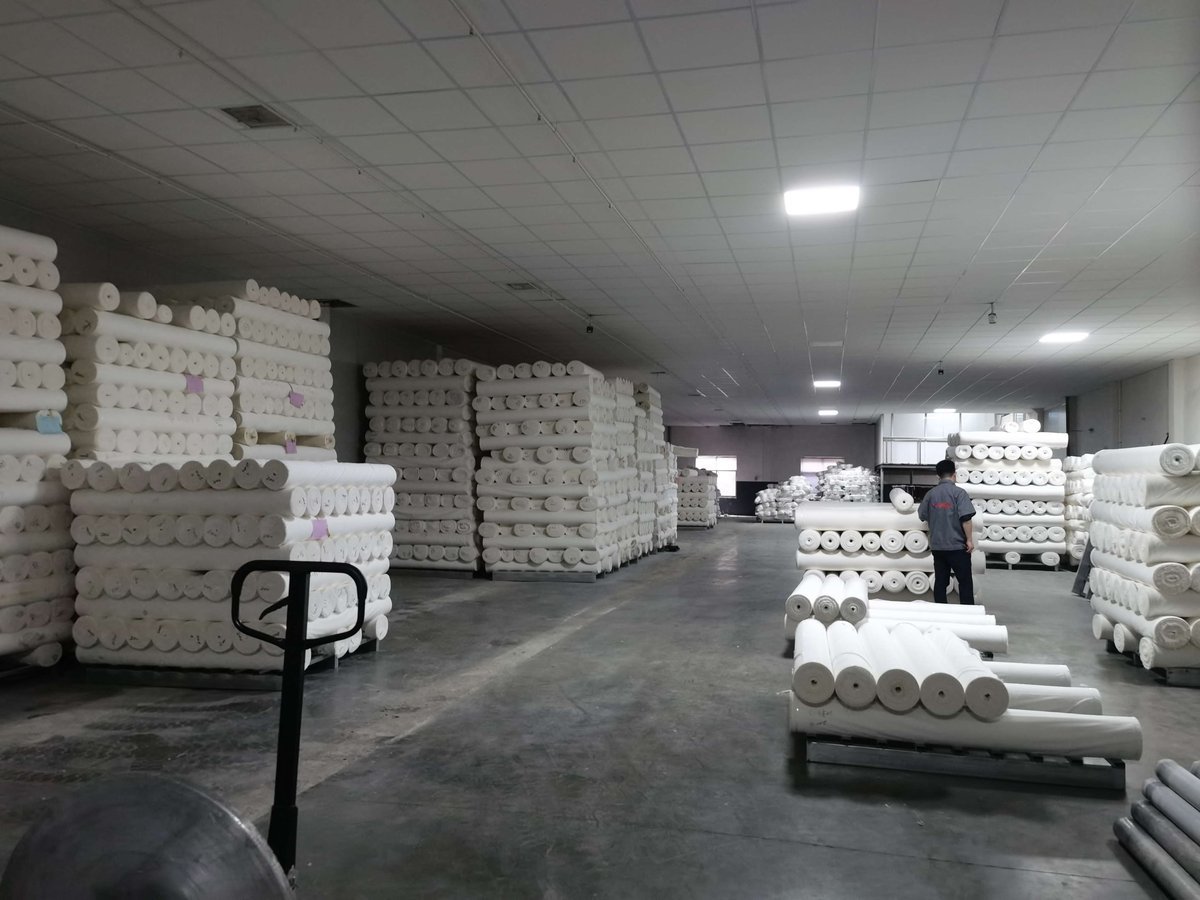
Greige cloth is inspected before wet processing, because construction and density faults are cheapest to catch here. The step is short, but it is also where rolls accumulate waiting for a dye lot. A warehouse full of greige is a queue with a calendar cost.
What each stage catches is covered in the two-stage inspection article, with grading rules in the four-point system guide. Skipping the greige check to save a day moves the defect into dyed cloth, where the same fault costs a full re-run.
Stage Five: Pretreatment, Dyeing or Printing
This is normally the longest block, with the most approval loops. Pretreatment, dyeing, reduction clearing and heat setting are sequential wet and thermal steps, set out in the polyester dyeing guide. Dyeing and printing run at long-term partner mills, whose lot schedule sits on the critical path.
Colour approval is a schedule item, not a formality. A lab dip must be submitted, assessed under defined light and approved before bulk starts; the shade approval guide shows how many round trips a loose tolerance creates. Printing adds screen or file preparation, covered in the printing route comparison. Yarn-dyed and piece-dyed do not share one timetable, so fix the route before the date.
Stage Six: Finishing and Functional Treatments
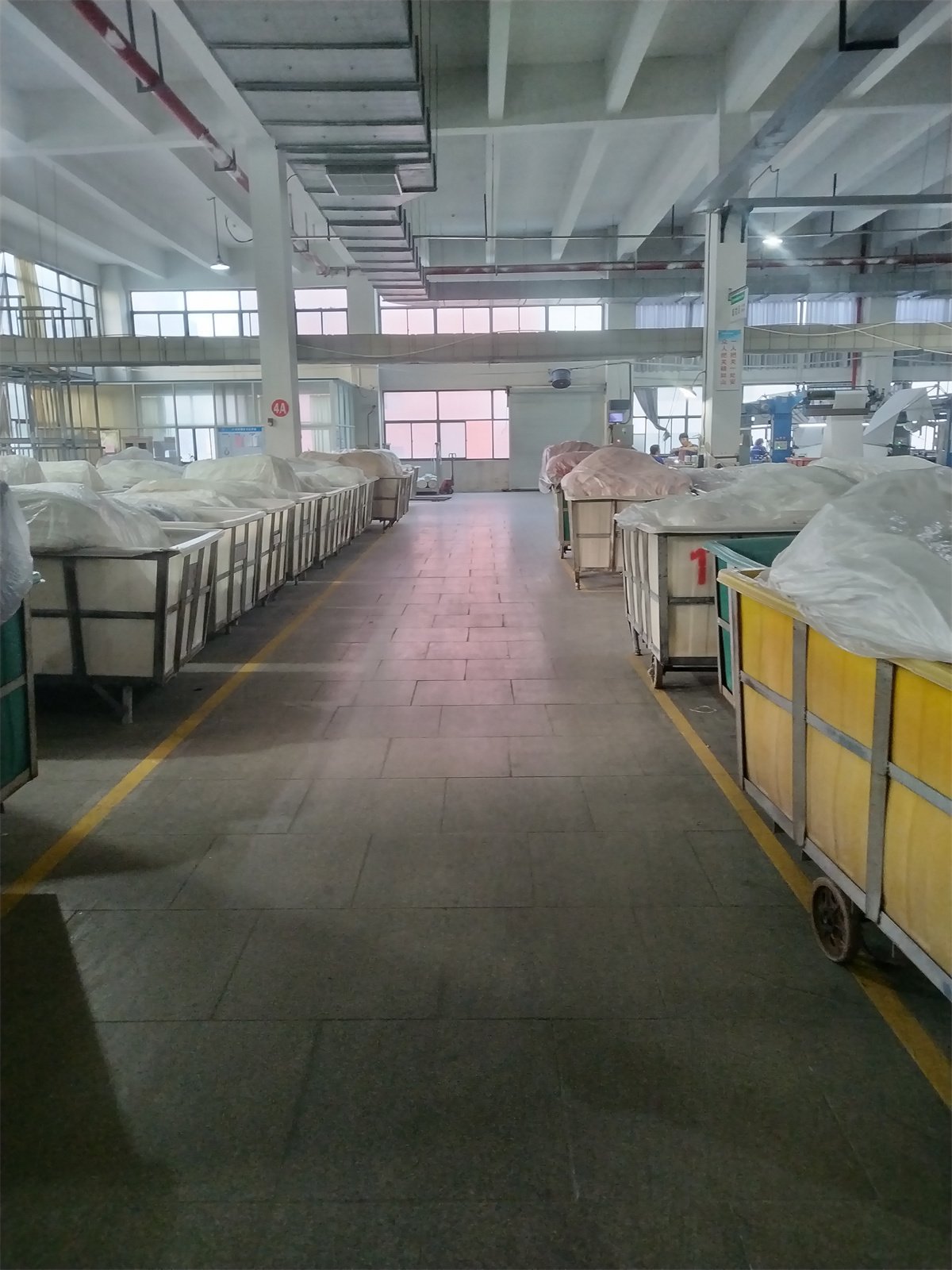
After colour comes the hand and performance route: softening, calendering, peach finishing, coating or a functional treatment. Each addition is another pass through a range and can require a re-check of shade, width and hand. Options are compared in the finishing routes guide and the coating selection article.
Functional finishes add testing time as well as machine time. A water-repellent, UV, moisture-management or flame-retardant program must be applied and verified, and some shift shade enough to send a lot back for re-approval; see the functional finish guide. Stack three finishes and you stack three queues. Specify only what the end use needs.
Stage Seven: Final Inspection, Testing and Packing
Finished cloth is graded, measured and packed. Test reports take their own slot: colour fastness, shrinkage, abrasion and water resistance are laboratory results with conditioning time, as the test report guide explains. A report requested after packing arrives after the shipment date.
Put-up is the last specification with a calendar cost. Roll length, tube, winding face and packing method are agreed here, then export packing and container booking follow; see the put-up and packing article. Freight and payment terms also sit on the schedule, as the quotation breakdown shows.
Lead Time by Stage: What Moves and What Does Not
The table compares influence, not a quotation of days. Durations are indicative and confirmed per order, depending on construction, colour route, lot size and mill scheduling.
| Stage | What Drives Its Duration | Compressible? | What to Write into the Order |
|---|---|---|---|
| Yarn allocation | Special denier, texture, recycled route | Rarely | Confirm availability before the date is set |
| Warping and sizing | Beam slot, ends, size family | Partly | Lock construction and reserve the beam early |
| Weaving | Density, width, loom allocation | Partly | Name construction and book loom capacity |
| Greige inspection | Grading and wait for a dye lot | Partly | Align greige release with the dye plan |
| Colour approval | Lab dip round trips and tolerance | Yes | Set light source, tolerance, approval deadline |
| Dyeing or printing | Bath, fixation, heat setting, lot queue | Rarely | Accept the physical minimum; avoid late changes |
| Finishing and testing | Number of passes and test conditioning | Partly | List finishes and tests at order placement |
| Inspection and packing | Grading, put-up, freight booking | Partly | Specify put-up and book freight in advance |
Where Compression Actually Works
The practical savings are administrative, not physical. Approving a standard shade card instead of a new lab dip, booking the loom and dye lot at order placement, sending construction and test list in one package, and holding approved greige for a repeat program all remove round trips.
Early decisions matter most where they touch the beam. A change to ends per inch, width or weave after warping restarts the chain; the GSM guide helps fix those choices before the first enquiry. A repeat order against an approved specification is usually quickest, because it removes approval loops.
Where Compression Fails
Some blocks have a floor. Dyeing needs bath and fixation time, heat setting needs its temperature window, and fastness or shrinkage tests need conditioning before a result can be reported. Skipping them moves the risk into the finished roll, where a complaint costs a full re-run.
Cross-mill transport and re-processing are the other hard costs. A lot sent back for re-finishing travels twice and re-enters a queue. Splitting a lot across dyeings creates batch variation and re-work. Expedited freight recovers days at the end, but not a missing approval at the start.
Writing the Schedule: A Seven-Line Clause
- State the despatch window and its basis — ex-works or a named delivery term.
- Attach the full construction — polymer, denier, filament count, ends and picks, width and weave, confirmed per order.
- Name the colour route and approval path — lab dip or shade card, light source, tolerance, sign-off.
- List every finish and every test at order placement, including verification methods.
- Specify put-up and packing — roll length, tube, winding face, export packing.
- Agree a change-order rule — which changes restart the beam, dye lot or test queue, and who absorbs the delay.
- Ask for a staged schedule — yarn release, greige ready, bulk approval, finishing, final inspection, available on request.
Frequently Asked Questions
Can a woven order be produced faster if we pay more?
Priority loom or dye lot slots can be bought; physical steps cannot. Premium freight recovers days at the margin, not a dye bath, a heat-setting pass or conditioning time before a test result.
Which single stage usually holds up an order?
Colour approval, because it depends on a buyer's response, not a machine. An undefined tolerance, a lab dip under different light, or a late approval all add round trips. Set the rule with the order.
Does choosing a standard colour really shorten the schedule?
It removes the lab dip loop and lets the mill book against an existing standard. The gain is in approvals and queue position, not dyeing time itself.
Why did a repeat order still miss its date?
Check the specification matched the approved one exactly. A changed width, finish or yarn route restarts part of the chain even with unchanged shade, and a late test is scheduled after finishing.
Put the Schedule in the First Enquiry
Send the construction, end use, colour route and despatch window together, and we can quote woven polyester and nylon programs with a staged schedule: yarn release, greige ready, shade approval, finishing and final inspection, with dyeing and finishing at long-term partner mills. Start with the inquiry form, and read the polyester and nylon comparison before fixing the fibre family. If a previous program slipped, say which stage slipped in your first message to us: a late approval, a re-finish and a freight delay need different fixes. For end-use context, the outdoor fabric selection, the polyester sourcing guide and the seam behaviour article cover what different applications demand.